
September 2, 202613 min read
Buying Used Construction Machinery in the UAE: A Complete Guide for Dubai, Abu Dhabi and the GCC

The United Arab Emirates (UAE) is one of the Middle East's most dynamic construction markets, with Dubai and Abu Dhabi leading a region-wide boom in infrastructure, real estate, and mega-project development. For contractors, rental companies, and equipment dealers operating in the UAE and the wider GCC (Gulf Cooperation Council) region, sourcing used construction machinery from China offers significant cost savings, a wide variety of brands and models, and reliable supply. The UAE's position as a regional logistics hub also makes it an ideal base for re-exporting machinery to other GCC and Middle Eastern markets. This guide covers the UAE/GCC market opportunity, in-demand machine types, import regulations, tariffs and VAT, shipping routes, and how ASURE Machinery supports UAE and GCC buyers.
1. UAE/GCC Construction Market Overview
Expo Legacy and Continued Development
The UAE's construction sector has been on a sustained growth trajectory, accelerated by the infrastructure development associated with Expo 2020 Dubai and continued investment in the post-Expo period. Dubai's Expo site is being transformed into District 2020, a mixed-use urban development. The UAE has also announced numerous new projects, including residential communities, commercial developments, and tourism infrastructure, ensuring that construction activity remains strong through the medium term.
NEOM and Regional Mega-Projects
While NEOM is located in Saudi Arabia, it has a significant impact on the UAE construction equipment market. NEOM — one of the largest construction projects in the world — requires massive quantities of machinery and equipment. Many UAE-based contractors and rental companies are supplying machinery to NEOM and other Saudi mega-projects (the Red Sea Project, Qiddiya, Riyadh Metro expansion). The UAE's geographic proximity to Saudi Arabia and its well-established logistics infrastructure make it a natural hub for equipment supply to the Saudi market.
Infrastructure and Real Estate
The UAE government continues to invest heavily in infrastructure, including road networks, public transportation (Dubai Metro expansion, Abu Dhabi Metro), airports, and utilities. The real estate sector — particularly in Dubai — is also experiencing strong activity, with numerous high-rise residential and commercial towers, luxury villa communities, and mixed-use developments under construction. These projects create sustained demand for excavators, wheel loaders, cranes, aerial work platforms, and material handling equipment.
2. Top Machine Types in Demand
Excavators
Excavators are essential across all construction sectors in the UAE. The 20-ton class is most popular, with models such as the Caterpillar 320D and Komatsu PC200 widely used. Larger excavators (30+ tons) are in demand for infrastructure and quarrying, while mini excavators serve urban construction and utility work.
Wheel Loaders
Wheel loaders are critical for material handling on construction sites, quarries, and industrial facilities. The Caterpillar 966H is one of the most popular models, valued for its durability and performance in the UAE's hot, sandy conditions. The UAE's extensive quarrying sector is a major source of wheel loader demand.
Cranes
The UAE's high-rise construction boom and large-scale infrastructure projects create strong demand for tower cranes and mobile cranes. Chinese manufacturers such as SANY and Zoomlion offer competitive products, with models such as the SANY STC500C5 (50-ton truck crane) popular for general construction lifting. The crane rental market in the UAE is well-developed.
Aerial Work Platforms
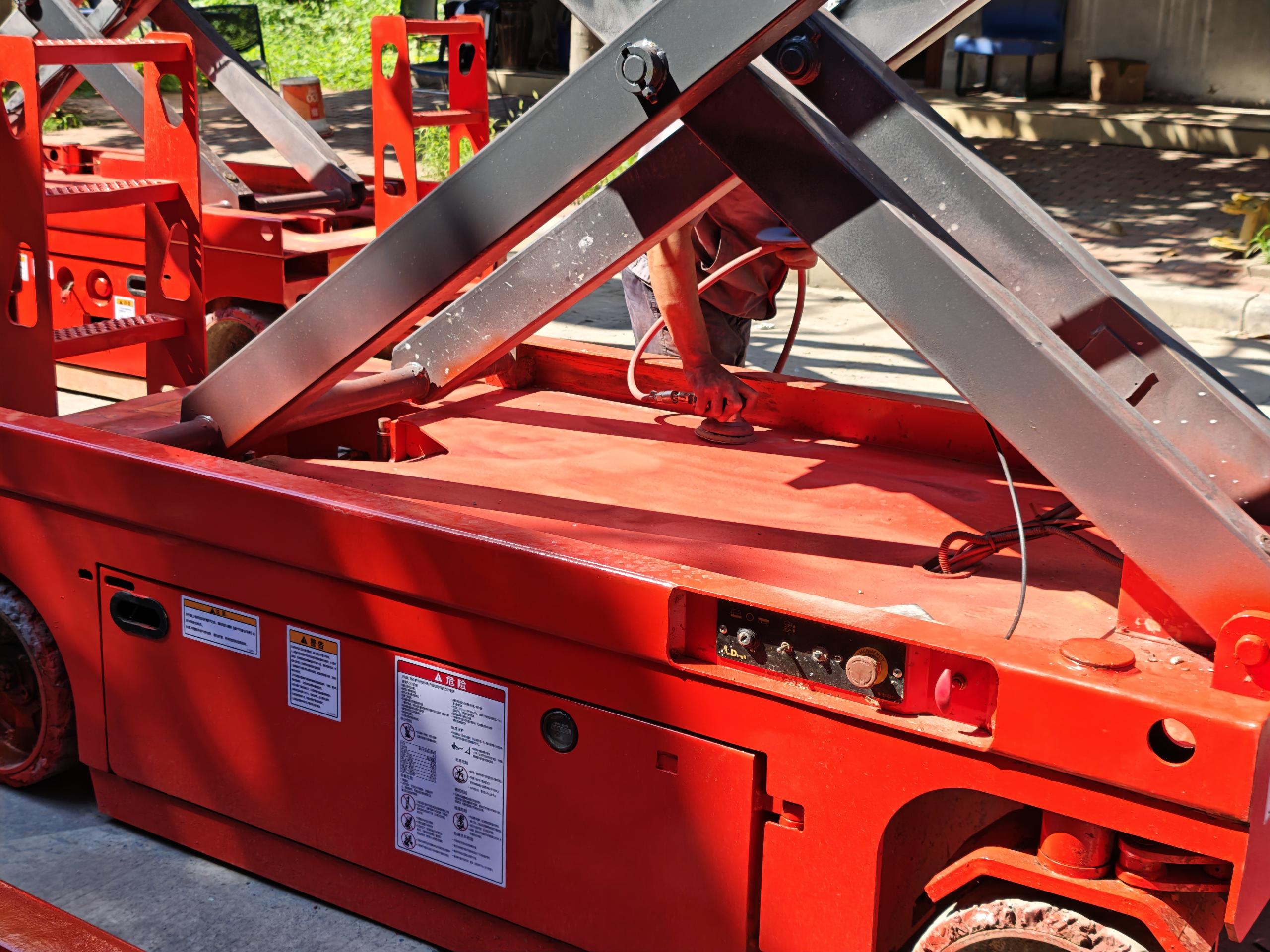
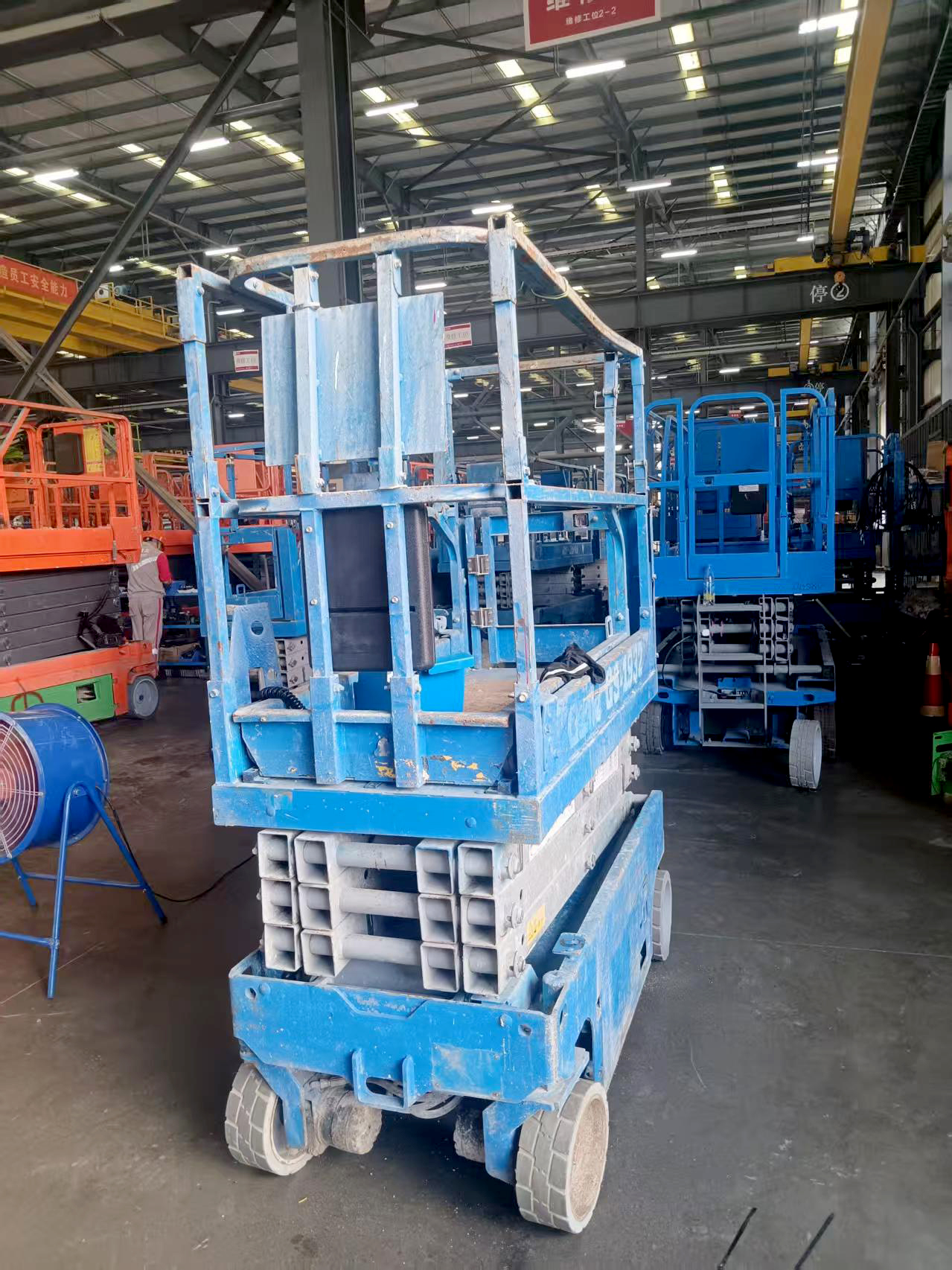
The UAE has one of the largest and most mature AWP rental markets in the Middle East, driven by high-rise construction, building maintenance, and the events and hospitality sectors. Scissor lifts are most common (6–18m), while boom lifts serve high-rise and facade work. Our AWP brand comparison analyzes leading brands. Models such as the Dingli JCPT1412 offer excellent value for rental fleets.
Forklifts
The UAE's position as a regional logistics hub creates strong demand for forklifts. Ports, free zones, warehouses, and distribution centers require a large fleet for container handling and logistics. Diesel forklifts in the 2–5 ton range are most common, with Chinese brands such as Heli offering excellent value. Models such as the Heli CPCD30 are popular for their reliability and low operating cost.
3. Import Regulations
Dubai Municipality and Local Regulations
Importing construction machinery into Dubai requires compliance with Dubai Municipality regulations. For certain types of machinery — particularly cranes, lifting equipment, and aerial work platforms — Dubai Municipality may require registration, inspection, and certification to ensure compliance with local safety standards. Confirm specific requirements with Dubai Municipality or a local compliance consultant before importing.
ESMA/EQM Certification
The Emirates Authority for Standardization and Metrology (ESMA) — now integrated into the Ministry of Industry and Advanced Technology (MoIAT) — is the UAE's national standards body. While not all construction machinery is subject to mandatory ESMA/EQM certification, certain categories — particularly cranes, lifting equipment, and pressure vessels — may require conformity assessment with applicable UAE standards. Voluntary EQM certification can demonstrate compliance and may be required by some project owners or government clients.
Customs Procedures
UAE customs procedures are generally efficient and business-friendly, particularly in the free zones. The standard import process involves online customs declaration, presentation of shipping documents, payment of import duty and VAT, and inspection (if selected). Dubai Customs and Abu Dhabi Customs both offer electronic declaration and risk-based inspection. For machinery imported into a free zone, duty and VAT may be deferred or exempted, provided the goods remain within the free zone or are re-exported.
4. Import Duty, Tariffs, and VAT
UAE Customs Duty
The UAE levies import duties on commercial goods depending on several factors: whether the business is registered onshore or in a Free Trade Zone (FTZ), the nature of the goods, the source and destination of the goods, and any applicable trade agreements. As a member of the GCC, the UAE applies the GCC Common Customs Tariff, which sets a standard duty rate of 5% on the CIF (Cost, Insurance, Freight) value of most imported goods. However, certain categories of goods — including some types of machinery and equipment — may be eligible for reduced duty rates or exemptions. For construction machinery under HS heading 8429, the applicable duty rate is typically 5% of the CIF value, though specific rates should be confirmed with UAE customs or a licensed customs broker.
Value Added Tax (VAT)
The UAE introduced Value Added Tax (VAT) on January 1, 2018, at a standard rate of 5%. VAT applies to most goods and services supplied in the UAE, including imported goods. For imported construction machinery, VAT is calculated at 5% of the CIF value plus any applicable customs duty. VAT is collected at the point of import by UAE customs, and businesses registered for VAT in the UAE can typically recover the input VAT paid on imports, subject to the normal VAT recovery rules. For machinery imported into a free zone and subsequently consumed within the free zone (rather than being moved to the mainland or re-exported), VAT treatment may differ — it is advisable to consult with a tax advisor to determine the correct VAT treatment for your specific situation.
GCC Common Customs and Re-Export
The GCC Common Customs Law allows for the free movement of goods between GCC member states (UAE, Saudi Arabia, Saudi Arabia, Kuwait, Bahrain, Oman, Qatar) once customs duty has been paid in the first GCC country of entry. This means that construction machinery imported into the UAE and then transported to another GCC country (such as Saudi Arabia for a NEOM project) will generally not be subject to additional customs duty in the destination country, provided that the duty was paid in the UAE and the goods meet the GCC common customs requirements. This makes the UAE an attractive hub for regional equipment supply and re-export. However, VAT and other local taxes may still apply in the destination country, and specific requirements should be confirmed with a customs advisor.
Total Landed Cost Estimate
As a rough estimate, total landed cost for machinery imported into the UAE (onshore) includes: CIF value, customs duty (typically 5%), VAT (5% of CIF + duty), customs clearance fees, port handling charges, and certification fees. Total additional costs beyond CIF are typically 12–18%. For free zone imports, duty and VAT may be deferred or exempted. Our HS code and duty quick reference provides additional guidance, but exact rates should be confirmed with a licensed UAE customs broker.
5. Shipping Routes and Ports
Major UAE Ports
- Jebel Ali Port (Dubai): The largest port in the Middle East and one of the busiest container ports in the world. Operated by DP World, Jebel Ali has extensive facilities for container, general, RoRo, and breakbulk cargo. It is the primary port of entry for construction machinery destined for Dubai and the northern emirates, and a major hub for re-export to other GCC and Middle Eastern markets.
- Khalifa Port (Abu Dhabi): Abu Dhabi's flagship port, operated by AD Ports Group. Khalifa Port is a semi-automated container port with facilities for general, RoRo, and breakbulk cargo. It is the primary port of entry for construction machinery destined for Abu Dhabi and the western region, and is strategically located near major industrial zones and the Saudi border.
- Port Rashid (Dubai): Located in central Dubai, Port Rashid primarily handles cruise ships and some general cargo. It is less commonly used for construction machinery imports, but may be used for oversized or project cargo.
- Khor Fakkan (Sharjah): Located on the east coast of the UAE, Khor Fakkan is a major container transshipment port. It can also handle general and RoRo cargo and is a convenient entry point for the eastern emirates.
Shipping from China to the UAE
The UAE is one of China's largest trading partners in the Middle East, and there are frequent, direct shipping services between major Chinese ports and UAE ports. Common shipping routes and transit times include:
- Shanghai to Jebel Ali: 14–18 days by container, 16–20 days by RoRo
- Ningbo to Jebel Ali: 13–17 days by container, 15–19 days by RoRo
- Guangzhou/Shenzhen to Jebel Ali: 12–16 days by container, 14–18 days by RoRo
- Shanghai to Khalifa Port (Abu Dhabi): 15–19 days by container, 17–21 days by RoRo
Container shipping is often preferred for smaller machines and for buyers who want maximum protection from the elements, while RoRo is cost-effective for larger self-propelled machines. For very large or oversized machines, breakbulk shipping may be required. The UAE's ports have excellent handling facilities for heavy and oversized cargo, making it straightforward to import machinery of all sizes. Our shipping methods comparison helps buyers choose the right option for their specific machine and budget.
6. Why Buy from ASURE Machinery — and the Re-Export Opportunity
UAE as a Regional Equipment Hub
The UAE's strategic location, world-class ports, free trade zones, and logistics infrastructure make it an ideal hub for construction equipment distribution across the GCC and wider Middle East. Machinery imported into the UAE can be used on local projects, rented out, stored in a free zone for regional distribution, or re-exported to other GCC countries (Saudi Arabia, Oman, Bahrain, Kuwait, Qatar) or to markets in Africa and South Asia. The GCC Common Customs arrangement means machinery imported into the UAE can generally be moved to other GCC countries without additional customs duty.
Professional Inspection and Quality Assurance
Every machine we export passes through our comprehensive inspection process, covering engine, hydraulics, undercarriage, structure, electrical systems, and cab. We provide a detailed inspection report with photos before payment, and offer live remote video inspections. For buyers planning to re-export machinery, our thorough inspection documentation provides assurance to end customers and reduces post-delivery disputes.
Warranty, After-Sales, and Shipping
We provide written warranties (1–12 months depending on condition grade), technical support via video call, and competitive spare parts pricing. For UAE-based buyers, spare parts can be shipped from China via air (5–7 days) or sea (14–18 days). We provide complete export documents and can arrange CIF delivery to Jebel Ali or Khalifa Port, or FOB terms. Review our condition grades and warranty terms on our conditions page.
7. Frequently Asked Questions
Q: What is the import duty rate for used construction machinery in the UAE?
A: Under the GCC Common Customs Tariff, most construction machinery under HS heading 8429 is subject to 5% customs duty on the CIF value, plus 5% VAT on the CIF value plus duty. For free zone imports, duty and VAT may be deferred or exempted. Exact rates should be confirmed with a licensed UAE customs broker.
Q: Do I need ESMA/EQM certification to import construction machinery into the UAE?
A: Not all construction machinery requires mandatory ESMA/EQM certification. However, certain categories — particularly cranes, lifting equipment, and machinery with safety implications — may be subject to mandatory conformity assessment. Voluntary EQM certification can demonstrate compliance and may be required by some project owners. Confirm specific requirements with the relevant UAE authority or a local compliance consultant before import.
Q: How long does shipping take from China to the UAE?
A: Ocean transit from major Chinese ports to Jebel Ali typically takes 12–18 days by container and 14–20 days by RoRo. To Khalifa Port (Abu Dhabi), transit times are 15–21 days. Including machine preparation, documentation, and port handling, the total process from deposit to port arrival is typically 3–5 weeks.
Q: Can I import machinery into a UAE free zone and then re-export it to another GCC country?
A: Yes. Machinery imported into a UAE free zone can be stored, serviced, or rented within the free zone without paying duty or VAT (subject to free zone rules). When moved to the mainland or re-exported to another GCC country, applicable duty and VAT are assessed at that point. Under the GCC Common Customs arrangement, machinery with duty paid in the UAE can generally move to another GCC country without additional customs duty. Consult a customs advisor for specific compliance details.
Q: What payment terms do you offer for UAE and GCC buyers?
A: Our standard terms are 30% deposit by T/T to confirm the order, with the remaining 70% paid before shipment after you receive the inspection report and shipping documents. For high-value transactions or first-time buyers, we can discuss Letter of Credit (L/C) terms. We always provide a signed proforma invoice before any payment, and all payments go to our corporate bank account.
The UAE and GCC construction market — driven by infrastructure development, real estate projects, and regional mega-projects such as NEOM — offers strong opportunities for contractors, rental companies, and equipment dealers. Sourcing used construction machinery from China provides cost-effective, reliable equipment, and the UAE's position as a regional logistics hub makes it an ideal base for both local use and re-export to other GCC and Middle Eastern markets. ASURE Machinery has the inspection capability, documentation expertise, and shipping experience to help UAE and GCC buyers source the right machines for their projects. To discuss your equipment requirements or request a quotation, please contact us — we respond within one business day.
Sources: U.S. Department of Commerce, United Arab Emirates Country Commercial Guide — Import Tariffs (last published 2025-08-25). Available at trade.gov. UAE customs duty rates are set under the GCC Common Customs Tariff; VAT is administered by the UAE Federal Tax Authority. Tariff rates, VAT treatment, and import requirements are subject to change; buyers should confirm current rates and requirements with a licensed UAE customs broker or tax advisor before shipment.
Related News
Sep 2, 2026
Remanufactured vs Refurbished vs Rebuilt vs As-Is: What These Terms Actually Mean on Used Machinery
Four labels — remanufactured, refurbished, rebuilt, as-is — can mean a USD 5,000 to USD 50,000 price gap on the same machine. A plain-English breakdown of industry standards, what each covers, warranty differences, and how to write the condition into your contract.
Sep 2, 2026
How to Pay for Machinery from China: T/T, Letter of Credit and Trade Assurance Compared
T/T, letter of credit, Trade Assurance, or escrow — which payment method protects you best when buying used construction machinery from China? A detailed breakdown of each method's process, costs, risks, and when to use each one, with a payment timeline and comparison table.
Sep 2, 2026
What Warranty Do You Actually Get on Used and Remanufactured Machinery?
Most used machinery is sold as-is with no warranty. Remanufactured machines may carry 30 to 90 days — but what does that actually cover, and what does it exclude? An honest breakdown of warranty coverage, exclusions, how to confirm terms before buying, and ASURE's warranty policy.