
September 2, 202623 min read
How to Verify a Machine's Year and Hours (Without Getting Burned): A Complete Forensic Guide
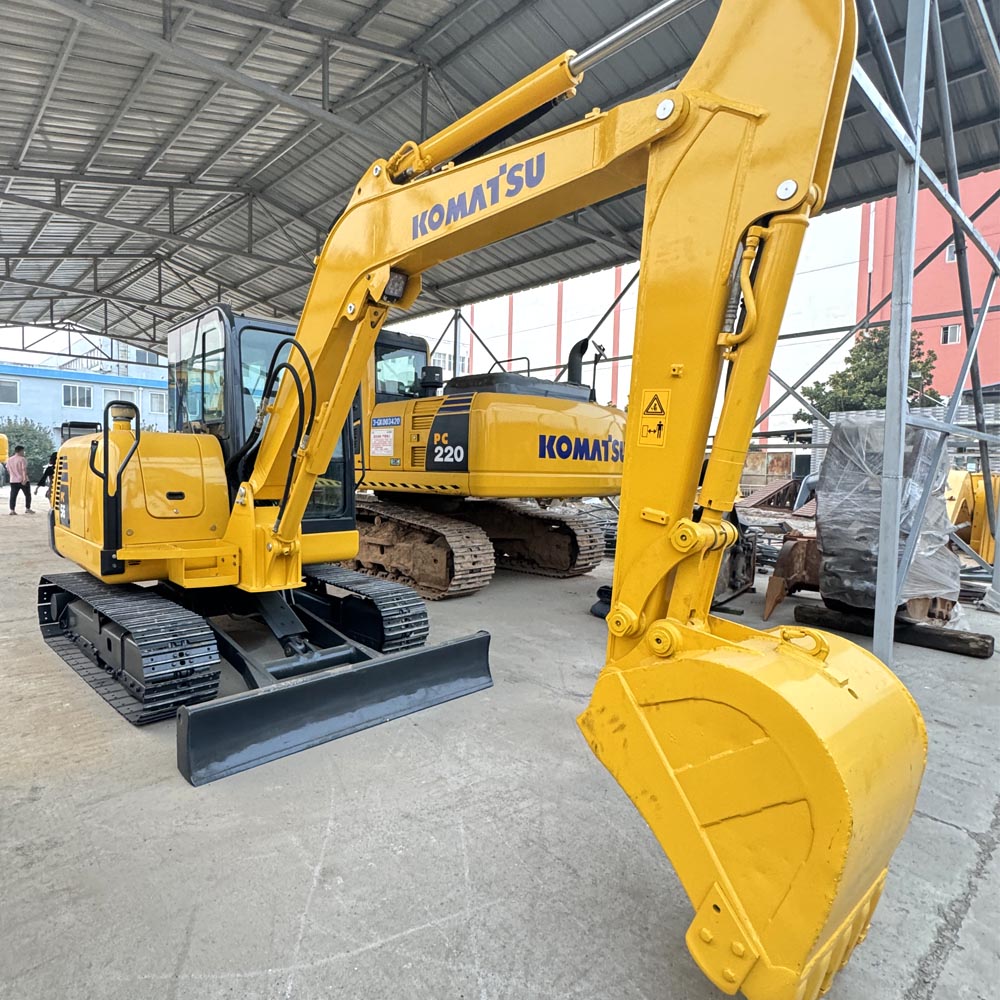
Every used-machinery buyer's nightmare is the same: you wire the money, the machine arrives, and you discover that the 2018 model with 3,500 hours you paid for is actually a 2014 model with 9,000 hours. The hour meter has been rolled back, the data plate has been altered, and the seller has disappeared. This is not a rare scenario — hour meter tampering and year misrepresentation are among the most common forms of used-machinery fraud, particularly in markets where machines change hands multiple times and documentation is sparse. This guide explains exactly how to verify a machine's true year and hour count, the common tampering methods to watch for, and how to cross-reference multiple data points to ensure you are not getting burned.
Why Year and Hours Matter
A machine's year and hour count are the two most important determinants of its value, remaining service life, and maintenance requirements. A 2018 Komatsu PC200 with 3,500 hours is worth $15,000–25,000 more than a 2014 PC200 with 9,000 hours — even though they may look identical in photographs. The difference is remaining service life: the 2018 machine may have 8,000–12,000 hours of reliable operation ahead of it, while the 2014 machine may need a major overhaul (engine, hydraulic pump, undercarriage) within 1,000–2,000 hours. The cost of that overhaul — $15,000–30,000 for a 20-tonne excavator — can erase any savings from a lower purchase price.
Year also matters for regulatory compliance. Machines built after certain dates meet specific emissions standards (Tier 3, Tier 4 Interim, Tier 4 Final) that affect whether the machine can be imported into your country and what fuel and maintenance it requires. A machine represented as a 2018 Tier 4 Final model that is actually a 2014 Tier 3 model may be refused entry at customs or may not meet your local operating requirements.
How to Verify the Year
1. The Data Plate (Nameplate)
Every construction machine has a factory data plate — typically a riveted metal plate or a stamped aluminium plate — located on the chassis, usually near the cab or on the counterweight. The plate contains the manufacturer, model, serial number (VIN), production date, and sometimes the engine serial number. This is the first place to check, but it is also the most commonly tampered-with component.
To verify a data plate:
- Check that the plate is factory-original: look for the manufacturer's specific font, layout, and rivet pattern. Aftermarket plates often use generic fonts and incorrect spacing.
- Check the rivets: factory rivets are usually smooth, uniform, and painted over. Replaced plates often have different rivet heads, uneven spacing, or unpainted rivets.
- Check for scratches or grinding around the plate: if the area around the plate has been sanded or repainted, the plate may have been removed and replaced.
- Compare the serial number on the plate with serial numbers stamped elsewhere on the machine (see below).
2. The VIN / Serial Number
The serial number (also called VIN or PIN — Product Identification Number) is the machine's unique identifier. It is typically stamped or engraved on the chassis frame in addition to appearing on the data plate. On excavators, the VIN is often stamped on the front of the upper frame near the boom pivot, or on the side of the counterweight. On loaders, it is often stamped on the front frame near the articulation joint. On AWPs, it is on the chassis or turret.
To verify the VIN:
- Locate the factory-stamped VIN on the chassis (not just the data plate) and compare it character-by-character with the data plate. Mismatched VINs are a major red flag.
- Check that the VIN stamping is factory-original: look for uniform character depth, consistent font, and no signs of re-stamping (double-struck characters, uneven depth, surrounding metal deformation).
- Decode the VIN: most manufacturers encode the production year and factory in the VIN. For example, Komatsu PC200-8 serial numbers starting with "K50" indicate a specific production range. Contact the manufacturer or use an online VIN decoder to confirm the year range associated with the serial number.
- Contact the manufacturer: Komatsu, Caterpillar, Volvo, SANY, and XCMG all have customer service departments that can look up a serial number and confirm the production date, original factory, and original configuration. This is the most definitive year verification method. Provide the serial number and ask for the production date and any service history on file.
3. Component Date Codes
Major components — engine, hydraulic pump, swing motor, final drives, hydraulic cylinders, batteries, tyres, glass — often have date codes stamped or printed on them. These date codes can be cross-referenced with the machine's claimed production year. If the machine is represented as a 2019 model but the engine has a 2015 date code, either the engine has been replaced (which should be disclosed) or the machine's year has been misrepresented.
Common component date code locations:
- Engine: The engine serial number plate (usually on the valve cover or engine block) includes a production date. For Cummins engines, the CPL (Critical Parts List) number and engine serial number can be decoded to determine the production date. For Isuzu engines, the engine serial number prefix indicates the production year.
- Hydraulic pump: Kawasaki and Rexroth pumps have date codes on the pump body or nameplate.
- Battery: Automotive-style batteries have a date code on the casing (usually a letter for the month and a number for the year). A 2019 machine with a 2024 battery is normal (batteries are consumables), but a 2019 machine with a 2014 battery suggests the machine may be older than claimed.
- Tyres/tracks: Tyres have a DOT date code (week and year of manufacture) on the sidewall. Rubber tracks have manufacturing date codes. Original tyres on a 2019 machine should have 2018–2019 date codes (they may have been replaced, which is normal, but the seller should be able to explain).
- Glass: Cab glass often has a manufacturer logo and a date code (dot matrix indicating month and year). Original glass should match the machine's production year.
- Hoses: Hydraulic hoses have a manufacturing date printed along the hose length. Original hoses should be close to the machine's production year.
4. ECU / Electronic Control Module Data
Modern machines (2012+) have electronic control modules (ECMs/ECUs) that store operational data, including engine hours, idle hours, fuel consumption, and sometimes the original production date. This data can be read using the manufacturer's diagnostic software (CAT Electronic Technician, Komatsu Vanscan/PC200-8 diagnostic, Volvo Penta, SANY diagnostic tool) or generic OBD-style readers.
ECU data is harder to tamper with than the hour meter display, because the data is stored in non-volatile memory in the ECM. However, it is not impossible — skilled technicians can rewrite ECM data using specialized tools. When reading ECU data, look for:
- Total engine hours vs. hour meter display: these should match or be very close. A significant discrepancy (more than 5–10%) suggests the hour meter has been replaced or tampered with.
- Idle hours vs. working hours: the ratio should be reasonable for the machine's application. A machine with 90% idle hours and 10% working hours may have been used as a stationary power source, or the data may have been manipulated.
- Fuel consumption data: total fuel consumed divided by total hours gives an average fuel burn rate. For a 20-tonne excavator, this should be 8–14 litres/hour depending on application. An implausibly low figure (e.g., 2 litres/hour) suggests the data has been altered.
- Production date in the ECU: some ECUs store the original production date or first-start date. This can be compared with the data plate.
5. Paint and Finish Analysis
A machine's paint can reveal its age and history. Original factory paint fades and chalks over time, particularly on surfaces exposed to sunlight. A 2019 machine should show some minor fading and wear consistent with its age, but not extensive rust or peeling. A machine that looks "too new" — with fresh, glossy paint on a 5+ year-old machine — may have been repainted to hide damage or to make an older machine appear newer.
To assess paint:
- Look for overspray on glass, seals, rubber hoses, and nameplates — these are signs of a repaint.
- Check paint thickness with a paint thickness gauge (available for $20–50 on Amazon). Factory paint is typically 30–60 microns. A repainted area may measure 100–300+ microns.
- Check for colour mismatch between panels — the cab, counterweight, and boom should all be the same shade if original.
- Look at wear patterns: footstep areas, handrails, and cab entry points should show wear consistent with the claimed hours. A machine with 3,000 hours should have minor wear; a machine with 9,000 hours should have polished/worn steps and handrails.
How to Verify the Hours
1. Hour Meter Inspection
The hour meter (also called a Hobbs meter or service meter) is the most obvious indicator of usage, but it is also the most commonly tampered-with component. Hour meters can be analog (mechanical, with rotating number wheels) or digital (LCD display).
To inspect an hour meter:
- Analog meters: Check the alignment of the number wheels. On a factory-original meter, the numbers should be perfectly aligned horizontally. Tampered meters often have misaligned numbers, especially the most significant digit (the one that was changed). Check for scratches on the meter glass or signs of the meter being removed (broken seal, mismatched screws).
- Digital meters: Digital hour meters are harder to physically tamper with but can be electronically reset. Check that the display is consistent — the reading should not flicker or change unexpectedly. Compare the hour meter reading with the ECU data (see below).
- Replacement meters: If the hour meter appears newer than the rest of the cab (no scratches, no fading), it may have been replaced. A replaced meter resets to zero, which means the displayed hours are only the hours since replacement — not the machine's total hours. Ask the seller if the meter has been replaced and request documentation of the original reading.
2. ECU / ECM Hour Reading
As described above, the engine control module stores total engine hours in non-volatile memory. This is the most reliable hour indicator on modern machines, because it is updated continuously by the engine's electronic system and is not affected by hour meter replacement or reset. To read ECM hours, you need the manufacturer's diagnostic software and cable, or a third-party diagnostic tool that supports the machine's engine brand (Cummins, Isuzu, Deutz, etc.).
When comparing ECM hours with the hour meter:
- A discrepancy of up to 5% is normal (the hour meter may have been replaced at some point, or the ECM may count hours slightly differently).
- A discrepancy of 10–30% suggests the hour meter has been tampered with or replaced without recording the original reading.
- A discrepancy of more than 30% is a major red flag — the machine likely has significantly more hours than displayed.
3. Physical Wear Cross-Validation
Physical wear is the most difficult thing to fake, because it accumulates progressively and predictably. An experienced mechanic can estimate a machine's hours within 10–20% by examining wear patterns on key components. This is called "wear-based hour estimation" and it is a critical cross-check against the hour meter and ECU data.
Key wear indicators and their hour correlations:
| Component | Low Hours (<3,000) | Medium Hours (3,000–6,000) | High Hours (>8,000) |
|---|---|---|---|
| Seat | Like new, no wear on bolsters | Minor wear on entry side bolster | Torn or heavily compressed bolsters, worn fabric |
| Control levers/joysticks | Crisp, no play, original grips | Slight play in joints, grips showing wear | Loose joints, worn-through grips, sloppy movement |
| Foot pedals | Original texture visible | Texture worn smooth on high-contact areas | Polished smooth, possibly bent or worn through |
| Steps and handrails | Original paint, minor scuffs | Worn paint on high-contact areas | Polished metal, worn through paint, bent rails |
| Track pads/tyres | 90%+ tread remaining | 50–70% tread remaining | 20% or less tread, visible cords/steel |
| Track chain links | Tight, no visible wear on pins | Minor pin wear, slight sag | Elongated pin holes, significant sag, worn rollers |
| Bucket cutting edge | Original thickness, sharp | Worn to 50–70% thickness | Worn through, replaced multiple times |
| Hydraulic cylinders | No leakage, clean chrome | Minor weeping at seals, minor scratches | Active leakage, deep scratches, worn chrome |
| Engine compartment | Clean, no oil residue, original paint | Minor oil residue, some dust accumulation | Heavy oil residue, caked grime, multiple repair signs |
If a machine displays 3,000 hours but shows high-hour wear patterns (torn seat, worn-through pedals, 20% track life, leaking cylinders), the hours have almost certainly been tampered with. The physical wear does not lie.
4. Service Records and Maintenance History
Service records are the paper trail of a machine's hours. Every time a machine is serviced, the service record includes the hour reading at the time of service. A complete service history creates a timeline of hour readings that can be checked for consistency. If the service records show 6,000 hours at the last service (12 months ago) but the meter now shows 3,500 hours, the meter has been rolled back.
When requesting service records:
- Ask for all service invoices, oil analysis reports, and filter change records.
- Look for hour readings on each invoice and check that they increase consistently over time.
- Contact the servicing dealer or mechanic to verify that the records are authentic and that the hour readings match their system.
- If the machine has telematics (KOMTRAX, Cat Connect, CareTrack, SANY AnyLink), request the telematics data export. This provides a complete hour-by-hour usage history that is very difficult to fake.
5. Oil Analysis
Oil analysis is a forensic tool that can reveal a machine's true usage and condition. A used oil sample from the engine, hydraulic system, or final drives can be analysed for metal particle content, viscosity, and contamination. High metal particle counts indicate significant wear consistent with high hours, even if the hour meter shows a low reading.
Oil analysis cannot directly tell you the hour count, but it can tell you whether the machine's internal condition is consistent with the claimed hours. A machine with 3,000 claimed hours should have low metal particle counts in the engine oil (under 50 ppm iron, under 20 ppm chromium). A machine with 3,000 claimed hours but 200+ ppm iron in the oil has an engine that has seen far more use than the meter suggests. Oil analysis costs $30–50 per sample and is one of the most cost-effective verification tools available.
Common Tampering Methods and How to Detect Them
Hour Meter Rollback
The most common tampering method. Analog hour meters can be rolled back by disassembling the meter and manually rotating the number wheels, or by using a specialized tool to drive the meter backward. Digital hour meters can be reset using electronic tools or by replacing the meter's memory chip.
Detection: Check number wheel alignment on analog meters. Compare meter reading with ECU/ECM hours. Cross-check with physical wear patterns. Look for signs of meter removal (broken seals, mismatched screws, fresh scratches).
Hour Meter Replacement
Instead of rolling back the existing meter, the seller replaces it with a new (or used) meter that shows a lower reading. The new meter starts at zero or at a low reading, so the displayed hours only reflect usage since the replacement.
Detection: Check that the meter looks consistent with the cab's age (a brand-new meter in a 5-year-old cab is suspicious). Ask if the meter has been replaced and request the original reading. Compare with ECU hours (which are not affected by meter replacement).
Data Plate Alteration
The seller removes the original data plate and replaces it with a counterfeit plate showing a later production year and a different (or re-typed) serial number. This is often done in conjunction with hour meter tampering to create a complete false identity for the machine.
Detection: Check rivet pattern and plate quality. Compare the data plate VIN with the factory-stamped VIN on the chassis. Contact the manufacturer with the serial number to verify production date. Check component date codes for consistency with the claimed year.
VIN Stamping Alteration
A more sophisticated version of data plate alteration: the seller grinds off the original factory-stamped VIN on the chassis and re-stamps a new VIN that matches the counterfeit data plate. This is difficult to do well and usually leaves evidence.
Detection: Look for grinding or sanding marks around the VIN stamping area. Check for uneven character depth or font inconsistency. Use a magnifying glass to inspect the stamping closely. Compare with VIN stampings on known-authentic machines of the same brand.
Repainting to Hide Age or Damage
The seller repaints the machine to make an older machine appear newer, or to hide structural damage, weld repairs, or excessive wear. Repainting is often combined with other tampering methods to create a "like new" appearance for a machine that is actually old and worn.
Detection: Look for overspray on glass, seals, and hoses. Use a paint thickness gauge to detect repainted areas. Check for colour mismatch between panels. Look at wear patterns — a repainted machine will still show physical wear on steps, pedals, and seat that is inconsistent with the claimed hours.
ECU Data Rewriting
The most sophisticated tampering method: a skilled technician uses specialized tools to rewrite the ECM/ECU data, reducing the stored engine hours and altering other operational data. This is rare but does occur, particularly on high-value machines where the price difference between low-hour and high-hour units is large.
Detection: ECU rewriting is difficult to detect without comparing the ECU data with independent evidence. Cross-check ECU hours with physical wear patterns, service records, and oil analysis. If the ECU data shows low hours but the physical condition shows high-hour wear, the ECU data may have been altered. Some manufacturers' diagnostic software can detect if the ECU has been reprogrammed (it may show a "programming count" or "last programmed date").
The Cross-Validation Method: How to Be Sure
No single verification method is foolproof. The key to reliable year and hour verification is to cross-reference multiple independent data points and look for consistency. If all data points agree, you can be confident in the machine's year and hours. If there are discrepancies, investigate further or walk away.
Use this verification checklist:
- Data plate — Record manufacturer, model, serial number, production date. Check for signs of tampering.
- Chassis VIN — Locate factory-stamped VIN, compare with data plate, check for signs of re-stamping.
- Manufacturer lookup — Contact manufacturer with serial number to confirm production date and original configuration.
- Component date codes — Check engine, hydraulic pump, battery, tyres, glass, hoses for date codes consistent with claimed year.
- Hour meter — Record reading, check for signs of tampering or replacement.
- ECU/ECM hours — Read engine hours from ECM, compare with hour meter.
- Physical wear assessment — Evaluate seat, controls, pedals, steps, tracks/tyres, cylinders, engine compartment for wear consistent with claimed hours.
- Service records — Review for hour reading consistency over time. Contact servicing dealer for verification.
- Telematics data — If available, request full data export for hour-by-hour usage history.
- Oil analysis — Take samples from engine, hydraulic system, final drives. Check for wear metal consistency with claimed hours.
A machine that passes all 10 checks is very likely to be accurately represented. A machine that fails 2 or more checks should be treated as high-risk — either the seller is intentionally misrepresenting the machine, or the machine has a complicated history that makes its true condition uncertain. In either case, proceed with extreme caution or walk away.
Documents to Request from the Seller
Before purchasing a used machine, request the following documents from the seller. A legitimate seller will have most or all of these; a seller who cannot or will not provide them is a red flag.
- Original purchase invoice or bill of sale — Shows the original buyer, purchase date, and purchase price. This establishes the machine's provenance and minimum age.
- Factory certificate of origin / production certificate — Some manufacturers provide a certificate showing the production date and original specifications.
- Complete service records — All service invoices, oil analysis reports, and maintenance logs since the machine was new (or since the current owner purchased it).
- Ownership/title documents — Proof that the seller has legal ownership of the machine and has the right to sell it. In some countries, this is a formal title document; in others, it is a bill of sale chain.
- Telematics data export — If the machine has KOMTRAX, Cat Connect, CareTrack, or equivalent, request a full data export showing the complete usage history.
- Inspection report — A recent (within 30 days) independent inspection report from a qualified mechanic or inspection service. The report should include hour readings, condition assessment, and photographs.
- Warranty documentation — If the machine is still under manufacturer warranty or has an extended warranty, request the warranty documents and confirm transferability.
Third-Party Inspection Services
If you are not confident in your ability to verify year and hours yourself, or if the machine is high-value, consider hiring a third-party inspection service. Independent inspectors can perform all of the verification steps described above, including ECU reading, oil analysis, and physical wear assessment, and provide a written report with photographs.
Options for third-party inspection include:
- Manufacturer dealer inspection — Komatsu, Caterpillar, Volvo, and other brands offer paid inspection services through their dealer networks. A dealer inspection has the advantage of access to the manufacturer's serial number database and proprietary diagnostic tools.
- Independent inspection companies — Companies like Equipment Experts, Inspect-All, and local independent mechanics offer used-machinery inspection services. Look for inspectors with specific experience in the machine type you are buying.
- Buyer's own mechanic — If you have a trusted mechanic who is familiar with the machine brand, have them perform the inspection. This is the most cost-effective option if you have access to qualified personnel.
- ASURE's 29-point inspection — Every machine we sell passes our 29-point inspection, which includes year and hour verification, physical condition assessment, and functional testing. We provide a detailed inspection report with photographs before payment, and we offer remote video inspections for buyers who cannot visit in person.
How ASURE Prevents Year and Hour Fraud
At ASURE Machinery, we take year and hour verification seriously because we know it is the most common point of fraud in the used-machinery trade. Our verification process includes:
- Source verification — We only source machines from known, trusted suppliers (leasing companies, large contractors, government auctions) with complete documentation. We do not buy from anonymous brokers or markets where machine provenance is uncertain.
- Serial number lookup — For every machine, we contact the manufacturer (or use the manufacturer's online system) to verify the production date and original configuration associated with the serial number.
- ECU/ECM hour reading — We read engine hours from the ECM using manufacturer diagnostic tools and compare them with the hour meter display. Any discrepancy greater than 5% is investigated and disclosed.
- Physical wear assessment — Our technicians perform a detailed wear assessment of the seat, controls, pedals, steps, undercarriage, cylinders, and engine compartment, and compare the wear patterns with the claimed hours.
- Component date code check — We check date codes on the engine, hydraulic pump, battery, tyres, and glass for consistency with the claimed production year.
- Service record review — We request and review all available service records, and we contact servicing dealers to verify the authenticity of key records.
- Oil analysis — For high-value machines or machines where hour verification is uncertain, we take oil samples and send them for laboratory analysis.
- Full disclosure — If we find any discrepancy between the machine's claimed year/hours and our verified findings, we disclose it in writing in the inspection report. We do not sell machines with unverified or misrepresented year/hour data.
This process is why our customers consistently report that the machine they receive matches the inspection report — no surprises, no hidden hours, no misrepresented years. For more on our inspection process, see our 29-point inspection guide and our complete excavator inspection checklist.
FAQ
Q: How common is hour meter tampering in the used-machinery market?
Industry estimates suggest that 15–30% of used construction machines sold through informal channels (private sales, small brokers, online marketplaces) have some form of hour meter discrepancy — either intentional rollback or unrecorded meter replacement. The rate is lower (5–10%) for machines sold through reputable dealers with documentation and inspection processes. The rate is highest for high-value machines (20+ tonne excavators, large AWPs) where the price difference between low-hour and high-hour units is greatest. This is why independent verification is essential — you cannot assume the hour meter is accurate just because it looks original.
Q: Can I verify a machine's year by the VIN without contacting the manufacturer?
Partially. Most manufacturers encode the production year in the VIN, but the encoding scheme varies by manufacturer and model generation. For example, Komatsu uses a serial number range system where certain prefixes correspond to specific production years, but this requires access to Komatsu's serial number reference data. Caterpillar uses a more complex encoding that includes factory, model, and production sequence. Online VIN decoders are available for some brands, but they are not always accurate or up-to-date. The most reliable method is to contact the manufacturer's customer service department with the serial number — most will provide the production date and original configuration for free or for a small fee.
Q: What if the seller refuses to let me read the ECU or take oil samples?
A seller who refuses reasonable verification requests — ECU reading, oil sampling, physical inspection, service record review — is a major red flag. Legitimate sellers have nothing to hide and will accommodate verification requests, particularly for high-value machines. If a seller refuses, it may be because the machine has something to hide (tampered hours, hidden damage, unclear ownership). In this situation, the safest course of action is to walk away. There are plenty of machines on the market from sellers who are willing to provide full transparency.
Q: How accurate is physical wear at estimating hours?
An experienced mechanic can estimate a machine's hours within 10–20% based on physical wear assessment. This is accurate enough to detect major tampering (e.g., a 9,000-hour machine represented as 3,000 hours), but not precise enough to distinguish between 4,000 and 5,000 hours. The accuracy depends on the mechanic's experience with the specific machine type and brand, and on the machine's operating conditions (a machine that has been used in abrasive conditions will show more wear at the same hours than one used in clean conditions). Physical wear assessment is best used as a cross-check against the hour meter and ECU data, not as a standalone hour estimator.
Q: Is it possible for a machine to have accurate hours but still be a bad buy?
Absolutely. Accurate hours are necessary but not sufficient for a good used-machinery purchase. A machine with verified low hours may still have been abused (run without maintenance, operated with contaminated oil, used in applications beyond its rating), suffered structural damage (cracked frame, repaired boom), or have hidden mechanical issues (failing hydraulic pump, worn engine bearings). This is why a comprehensive inspection — beyond just year and hour verification — is essential. See our complete excavator inspection checklist and our 10 red flags guide for what to look for beyond hours.
Sources: Komatsu, Caterpillar, Volvo, SANY, and XCMG official customer service and serial number lookup procedures; industry tampering prevalence estimates from Equipment Trader and Machinery Trader market reports; oil analysis interpretation guidelines from Polaris Laboratories and Oil Analyzers Inc.; paint thickness measurement standards from ISO 2178. This guide is for informational purposes and does not constitute a guarantee of any specific machine's condition. Always perform your own verification or hire a qualified independent inspector before purchasing used machinery. For ASURE-sold machines, our 29-point inspection report provides verified year and hour data as part of the pre-purchase documentation.
Related News
Sep 2, 2026
Remanufactured vs Refurbished vs Rebuilt vs As-Is: What These Terms Actually Mean on Used Machinery
Four labels — remanufactured, refurbished, rebuilt, as-is — can mean a USD 5,000 to USD 50,000 price gap on the same machine. A plain-English breakdown of industry standards, what each covers, warranty differences, and how to write the condition into your contract.

Sep 2, 2026
How to Pay for Machinery from China: T/T, Letter of Credit and Trade Assurance Compared
T/T, letter of credit, Trade Assurance, or escrow — which payment method protects you best when buying used construction machinery from China? A detailed breakdown of each method's process, costs, risks, and when to use each one, with a payment timeline and comparison table.
Sep 2, 2026
What Warranty Do You Actually Get on Used and Remanufactured Machinery?
Most used machinery is sold as-is with no warranty. Remanufactured machines may carry 30 to 90 days — but what does that actually cover, and what does it exclude? An honest breakdown of warranty coverage, exclusions, how to confirm terms before buying, and ASURE's warranty policy.