
September 2, 202614 min read
Chinese vs Western Machinery Brands: What the Price Gap Really Means for Used Buyers
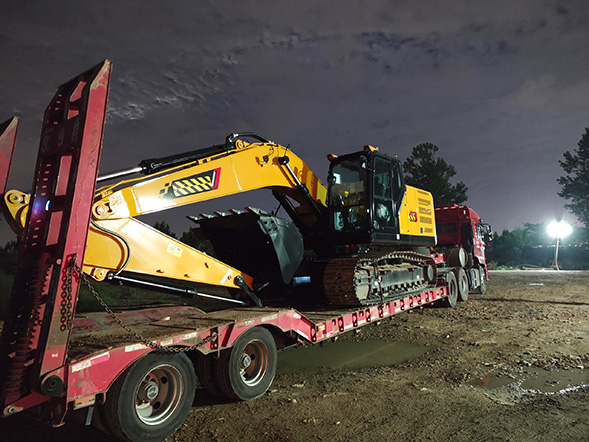
A Chinese 20-tonne excavator costs 40–60% less than a comparable Komatsu or Caterpillar. That price gap is the single biggest reason buyers in Africa, Southeast Asia, the Middle East, and Latin America are increasingly choosing Chinese machinery. But a lower purchase price does not always mean a lower total cost of ownership. The real question is not "which is cheaper?" but "what does the price gap actually buy you, and what does it cost you?" This guide examines the real reasons behind the price difference, whether the quality gap still exists, how Chinese and Western brands compare on technology and residual value, and which scenarios justify each choice.
Why Chinese Machinery Costs Less
The price gap between Chinese and Western construction machinery is not the result of one factor — it is the cumulative effect of structural differences in manufacturing cost, R&D investment, brand positioning, and supply chain economics.
Manufacturing Cost
China has the world's largest and most integrated construction machinery supply chain. From steel castings and hydraulic hoses to electronic controllers and rubber tracks, nearly every component that goes into an excavator can be sourced within a few hundred kilometres of a Chinese factory. This proximity reduces logistics costs, shortens lead times, and creates intense competition among component suppliers that drives prices down. Chinese factories also benefit from lower labour costs — though the gap has narrowed significantly over the past decade — and from economies of scale that come from serving the world's largest domestic construction market. A Chinese excavator factory may produce 30,000–50,000 units per year, while a Western factory producing the same class may produce 5,000–15,000 units. That volume difference spreads fixed costs over more units, reducing per-unit manufacturing cost.
R&D Amortisation
Western brands invest heavily in research and development — Caterpillar spends approximately $2–3 billion per year on R&D, Komatsu approximately $1.5–2 billion. This investment funds advanced engine technology, emissions compliance, telematics, autonomous operation, and continuous product improvement. These R&D costs are amortised into the price of every machine. Chinese brands invest in R&D too — SANY spends approximately 5–7% of revenue on R&D — but their total R&D budget is smaller, and much of it is focused on incremental improvement and localisation rather than fundamental technology development. Chinese brands also benefit from technology transfer through joint ventures, component supplier relationships, and reverse engineering that reduce the cost of developing comparable products.
Brand Premium
Caterpillar, Komatsu, and Volvo have spent 60–100 years building brand reputations for quality, durability, and reliability. Buyers pay a premium for that reputation because it reduces perceived risk — a contractor who buys a Caterpillar knows, based on decades of industry experience, that the machine is likely to hold up. Chinese brands do not yet have that long track record in international markets, so they cannot command the same brand premium. This is partly a time issue — SANY and XCMG have only been serious international players for 10–15 years — and partly a quality issue, as discussed below.
Emissions and Regulatory Compliance
Machines built for European and North American markets must meet Tier 4 Final / Stage V emissions standards, which require expensive after-treatment systems (diesel particulate filters, selective catalytic reduction, exhaust gas recirculation) and advanced engine electronics. These systems add $5,000–$15,000 to the cost of a 20-tonne excavator. Many Chinese machines sold in emerging markets are built to Tier 2 or Tier 3 standards, which use simpler, cheaper engine technology. While this is a legitimate cost difference, it also means that Chinese machines may not be importable into countries with strict emissions regulations.
Does the Quality Gap Still Exist?
The short answer is yes, but it has narrowed dramatically. The longer answer requires distinguishing between different quality dimensions and different machine generations.
What Has Improved
Current-generation Chinese excavators (2020+) from SANY, XCMG, LiuGong, and Zoomlion use many of the same core components as Western brands — Kawasaki and Rexroth hydraulic pumps, Isuzu and Cummins engines, Nachi and Kawasaki swing motors. The premium H-series (SANY) and GH-series (XCMG) models use higher-quality Japanese hydraulic components throughout, and their structural fabrication quality — welds, casting, frame design — is now comparable to mid-tier international brands. Operator cabs on current models feature air suspension seats, climate control, digital displays, and ergonomic controls that match or exceed the comfort of Western machines from five years ago. Chinese brands have also invested heavily in quality control systems, with many factories achieving ISO 9001 certification and implementing lean manufacturing processes.
Industry data supports this improvement. According to the China Construction Machinery Association (CCMA), Chinese excavator reliability — measured as mean time between failures (MTBF) — has improved from approximately 300–400 hours in the early 2010s to 800–1,200 hours on current premium models. While this is still below the 1,500–2,000 hour MTBF of Komatsu and Caterpillar, the gap has closed from a factor of 4–5x to a factor of 1.5–2x.
Where the Gap Remains
The remaining quality gap is most visible in three areas: long-term durability, hydraulic system refinement, and after-treatment reliability. Chinese machines that exceed 8,000–10,000 hours show more wear in undercarriage components (track chains, rollers, idlers), more hydraulic drift (cylinder leakage, pump wear), and more electrical issues (sensor failures, controller problems) than comparable Komatsu or Caterpillar machines. The hydraulic control feel — the smoothness and precision of boom, arm, and bucket movement — is still less refined on Chinese machines, particularly on value-series models that use domestic hydraulic pumps. And while Chinese Tier 4 Final machines are available, their after-treatment systems have a higher failure rate in markets with poor fuel quality than Western equivalents.
Technology Gap: Engines, Hydraulics, Intelligence
| Technology Area | Western Brands (CAT/Komatsu/Volvo) | Chinese Brands (SANY/XCMG/LiuGong) |
|---|---|---|
| Engine technology | In-house designed, Tier 4 Final/Stage V, advanced electronics | Mostly Isuzu/Cummins/Weichai, Tier 2–4, less integration |
| Hydraulic system | In-house designed, closed-centre load-sensing, precise control | Kawasaki/Rexroth (premium) or domestic (value), good but less refined |
| Telematics | Cat Connect / KOMTRAX / CareTrack — mature, feature-rich | SANY AnyLink / XCMG X-Link — basic, improving |
| Autonomous/semi-autonomous | CAT Command for hauling, Komatsu autonomous mining — commercial deployments | Prototype/early stage, limited commercial deployment |
| Electrification | Volvo EC230 Electric (23t), CAT prototype electric — limited but advanced | SANY SY155E (15t electric), XCMG XE215E — more models, lower cost |
| Emissions after-treatment | Mature DPF+SCR+EGR, reliable with ULSD | Available but higher failure rate with poor fuel quality |
The technology gap is real but narrowing fastest in electrification, where Chinese brands have a structural advantage due to China's dominant position in lithium-ion battery manufacturing and electric motor supply chains. SANY and XCMG already offer more electric excavator models than Caterpillar or Komatsu, at lower prices. In traditional diesel technology, Western brands retain a lead in engine integration, hydraulic refinement, and telematics sophistication. In autonomous operation, Western brands — particularly Caterpillar in mining — have a substantial lead that will take Chinese brands years to close.
Resale Value: The 5-Year Picture
Resale value is where the price gap between Chinese and Western brands is most starkly visible — and where it most affects total cost of ownership. A machine that costs less upfront but loses value faster may end up costing more over the ownership period if you plan to sell it.
| Brand | New Price (20t, indicative) | 5-Year Residual Value | 5-Year Depreciation |
|---|---|---|---|
| Komatsu PC200 | $130,000–160,000 | 45–55% | $58,500–88,000 |
| Caterpillar 320 | $140,000–170,000 | 40–50% | $70,000–102,000 |
| Volvo EC210 | $125,000–155,000 | 35–45% | $68,750–100,750 |
| SANY SY215C | $70,000–95,000 | 30–40% | $42,000–66,500 |
| XCMG XE200GH | $65,000–90,000 | 30–40% | $39,000–63,000 |
The key insight is that while Chinese brands have lower residual value percentages, their absolute depreciation (the dollars lost) is still lower than Western brands because the starting price is much lower. A SANY SY215C that depreciates 65% over 5 years loses $45,000–62,000, while a Komatsu PC200 that depreciates 50% loses $65,000–80,000. So even with worse residual value, the Chinese machine still costs less in absolute depreciation. The caveat is liquidity — a Komatsu or Caterpillar will sell in weeks almost anywhere in the world, while a Chinese brand may take months to sell in markets where the brand is not well established.
Chinese brand residual values are improving. As SANY and XCMG build their international reputations and service networks, used buyers become more comfortable purchasing Chinese machines, which supports resale prices. Industry analysts expect Chinese brand residual values to increase by 5–10 percentage points over the next 3–5 years as brand awareness and service infrastructure mature.
Total Cost of Ownership: The Real Comparison
Total cost of ownership (TCO) combines purchase price, fuel, maintenance, parts, and residual value over the ownership period. For a 20-tonne excavator running 2,000 hours per year for 5 years (10,000 total hours), the TCO comparison looks approximately like this:
| Cost Component | Komatsu PC200 | SANY SY215C | Difference |
|---|---|---|---|
| Purchase price (used, 3yr old) | $70,000–90,000 | $35,000–50,000 | -$35,000–40,000 |
| Fuel (10,000 hrs) | $40,000–50,000 | $44,000–55,000 | +$4,000–5,000 |
| Maintenance and parts | $15,000–25,000 | $20,000–35,000 | +$5,000–10,000 |
| Resale value (at 8yr old) | $25,000–35,000 | $10,000–18,000 | -$15,000–17,000 |
| Net 5-year TCO | $100,000–130,000 | $81,000–122,000 | -$8,000–19,000 |
The TCO comparison shows that Chinese machinery can be 10–20% cheaper over a 5-year ownership period, even accounting for higher fuel consumption, higher maintenance costs, and lower resale value. The advantage is largest for moderate-utilisation operations (1,000–2,000 hours/year) where the machine is not pushed to its limits and maintenance costs are manageable. The advantage narrows or disappears for high-utilisation operations (3,000+ hours/year) where the Chinese machine's lower durability leads to more frequent major repairs and downtime.
For a detailed TCO analysis specific to your operation, see our 5-year TCO guide.
Parts and Service Network: By Region
| Region | Western Brands (CAT/Komatsu) | Chinese Brands (SANY/XCMG) |
|---|---|---|
| Sub-Saharan Africa | Good — CAT dealers in most capital cities, Komatsu in major markets | Improving — SANY dealers in 20+ countries, XCMG in major markets; parts often sourced from China |
| Middle East | Excellent — strong dealer networks in GCC, widespread parts availability | Good — both brands have distributors in GCC and major markets; parts improving |
| Southeast Asia | Excellent — Komatsu dominant, CAT strong, parts available everywhere | Good — strong presence in Indonesia, Vietnam, Thailand, Philippines; parts readily available |
| South Asia (India) | Good — CAT and Komatsu have manufacturing and dealers | Good — SANY and XCMG have factories and growing dealer networks |
| Central Asia/CIS | Fair — CAT and Komatsu dealers in Russia, Kazakhstan; thinner elsewhere | Good — XCMG strong in Uzbekistan/Kazakhstan, SANY expanding; Chinese parts accessible |
| Latin America | Good — CAT dominant, Komatsu strong in Brazil/Chile/Peru | Fair — SANY factory in Brazil, XCMG distributors; parts less available outside Brazil |
When to Choose Chinese Brands
- Budget-sensitive operations — If upfront capital is constrained and you need the most machine for the lowest purchase price, Chinese brands offer unbeatable value.
- Emerging markets with good Chinese brand support — In Southeast Asia, parts of Africa, and Central Asia, SANY and XCMG dealer networks are now adequate for routine support.
- Short-to-medium term projects — If you need a machine for 1–3 years and plan to sell or retire it, the lower purchase price and adequate durability of Chinese brands make them a strong choice.
- Moderate utilisation — At 1,000–2,000 hours per year, Chinese premium-series machines deliver reliable performance at significantly lower cost.
- Fleet buyers who can self-maintain — If you have in-house mechanics and can source parts directly from China, the lower parts cost of Chinese machinery amplifies the TCO advantage.
- Electric machinery — Chinese brands offer more electric excavator, loader, and AWP models at lower prices than Western brands, with China's battery supply chain providing a structural cost advantage.
When to Choose Western Brands
- High-utilisation, long-term operations — If you run a machine 3,000+ hours per year for 5+ years, the superior durability of Komatsu and Caterpillar reduces downtime and major repair costs.
- Remote locations with limited service infrastructure — Caterpillar's global dealer network is unmatched in remote areas; if the nearest mechanic is 500 km away, a Caterpillar is the safest choice.
- Resale value and liquidity priority — If you plan to sell the machine after 2–3 years and need it to sell quickly, Komatsu and Caterpillar have the most liquid global used markets.
- Heavy-duty and mining applications — For 30+ tonne class machines in abrasive, high-impact conditions, Western brands' reinforced structures and proven durability justify the premium.
- Global fleet standardisation — If you operate across multiple countries and need a single brand for parts, training, and fleet management, Caterpillar or Komatsu offer the most consistent global support.
- Emissions-regulated markets — In the EU, North America, and other Tier 4 Final/Stage V markets, Western brands' mature after-treatment technology and compliance documentation make import and operation simpler.
ASURE's Selection Strategy
At ASURE Machinery, we take a pragmatic, market-specific approach to brand selection. We do not believe that Chinese brands are always the best choice, or that Western brands are always worth the premium. Instead, we match the brand to the buyer's market, utilisation profile, and budget:
- For buyers in Southeast Asia and parts of Africa with moderate utilisation, we often recommend Chinese premium-series (SANY H-series, XCMG GH-series) machines for their combination of low purchase price, adequate durability, and improving parts support.
- For buyers in remote locations, high-utilisation operations, or markets where resale liquidity is critical, we recommend Komatsu or Caterpillar — the extra upfront cost buys reliability, parts availability, and resale value that reduce total cost over the ownership period.
- For buyers who need a mix — e.g., a primary production machine that runs 3,000 hours/year plus support machines that run 800 hours/year — we recommend Western brands for the high-utilisation machines and Chinese brands for the support machines, optimising TCO across the fleet.
- For all machines, regardless of brand, we apply our 29-point inspection and remanufacturing standards to ensure that the machine you receive is in the condition we describe, with no hidden defects or misrepresented hours.
FAQ
Q: Is Chinese construction machinery quality now comparable to Western brands?
For current-generation premium-series models (SANY H-series, XCMG GH-series), quality is close to Western brands in the first 5,000–8,000 hours, but still lags in long-term durability (10,000+ hours), hydraulic refinement, and after-treatment reliability. The gap has narrowed from 4–5x in the early 2010s to 1.5–2x today, and it continues to close. For moderate-utilisation operations, the quality difference may not be noticeable. For high-utilisation, heavy-duty operations, it still matters.
Q: How much do I really save with a Chinese machine over 5 years?
For a 20-tonne excavator running 2,000 hours/year, the net 5-year TCO saving is typically $8,000–19,000 (10–20% lower than a Komatsu or Caterpillar). The saving is largest when you self-maintain, source parts from China, and keep the machine for the full 5 years. The saving narrows if you have high downtime costs, pay premium labour rates for maintenance, or sell the machine early in a market with low Chinese brand liquidity.
Q: Are Chinese brands a risky purchase for export?
The risk has decreased significantly as Chinese brands have built international service networks and improved quality. The main remaining risks are: (1) parts availability in remote markets — mitigate by establishing a parts source before purchase and stocking critical spares; (2) resale liquidity — mitigate by buying popular models (SY215C, XE200GH) that have the largest used-market demand; (3) long-term durability above 8,000 hours — mitigate by choosing premium-series models and following a strict maintenance schedule. With these mitigations, Chinese brands are a reasonable choice for most export buyers.
Q: Will Chinese brand resale values improve in the future?
Yes, industry analysts expect Chinese brand residual values to improve by 5–10 percentage points over the next 3–5 years as brand awareness, service infrastructure, and product quality continue to mature. SANY's aggressive international expansion — 64% of revenue from overseas in 2025, with Africa growing 55% — is particularly supportive of resale values in emerging markets. However, Chinese brands are unlikely to reach Komatsu/Caterpillar residual value levels in the near term, because the Western brands' 60–100 year track records and global dealer networks create a durable competitive advantage.
Q: Should I mix Chinese and Western brands in my fleet?
Yes, fleet mixing is often the optimal TCO strategy. Use Western brands (Komatsu, Caterpillar) for high-utilisation production machines that run 2,500+ hours/year, where durability and uptime are critical. Use Chinese brands (SANY, XCMG) for support machines, short-term project machines, and low-utilisation units (under 1,500 hours/year), where the lower purchase price dominates TCO. This approach gives you the reliability of Western brands where it matters most and the cost savings of Chinese brands where the risk is lower.
Sources: KHL Group International Construction Yellow Table 2025; SANY Heavy Industry 2025 Annual Report (international revenue 55.9B RMB, 64% overseas ratio, Africa +55.29%); China Construction Machinery Association (CCMA) industry reliability data; China Economic Net (construction machinery export growth 2020–2025); EquipmentWatch and Rouse Services residual value data. TCO figures are indicative estimates for 20-tonne class excavators in general digging applications and may vary significantly by region, fuel price, labour cost, and machine condition. Residual value ranges are for well-maintained machines in emerging markets. MTBF data is industry-estimated and may vary by model and application.
Related News
Sep 2, 2026
Remanufactured vs Refurbished vs Rebuilt vs As-Is: What These Terms Actually Mean on Used Machinery
Four labels — remanufactured, refurbished, rebuilt, as-is — can mean a USD 5,000 to USD 50,000 price gap on the same machine. A plain-English breakdown of industry standards, what each covers, warranty differences, and how to write the condition into your contract.

Sep 2, 2026
How to Pay for Machinery from China: T/T, Letter of Credit and Trade Assurance Compared
T/T, letter of credit, Trade Assurance, or escrow — which payment method protects you best when buying used construction machinery from China? A detailed breakdown of each method's process, costs, risks, and when to use each one, with a payment timeline and comparison table.
Sep 2, 2026
What Warranty Do You Actually Get on Used and Remanufactured Machinery?
Most used machinery is sold as-is with no warranty. Remanufactured machines may carry 30 to 90 days — but what does that actually cover, and what does it exclude? An honest breakdown of warranty coverage, exclusions, how to confirm terms before buying, and ASURE's warranty policy.