
August 29, 20264 min read
How to Avoid Scams When Buying Used Construction Machinery from China: A Buyer's Verification Guide
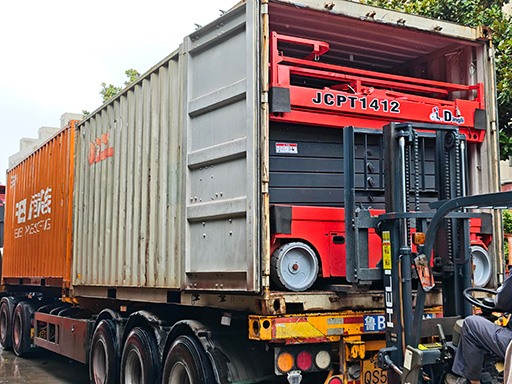
The honest truth about scams in the China used-machinery export trade, and the verification steps that catch roughly nine out of ten of them.
What “scam” actually means in this trade
Most buyers who contact us about a “scam” did not get nothing for their money. What they got was a unit that did not match the listing, or a unit that arrived damaged, or a unit that never arrived at all and the seller stopped replying. These are different problems with different causes — and different verification steps that would have caught them before payment.
Step 1 — verify the company is real, not just listed
A Chinese business license is a starting point, not a guarantee. Look up the company on the National Enterprise Credit Information Publicity System (NECIPS) at gsxt.gov.cn. You want to see: a registered capital of at least RMB 1 million, an operating status of “存续” (in business), a registered address that matches what the seller is showing you, and a date of establishment of more than three years. A company that was registered six months ago with RMB 100,000 capital is a higher risk, not because new companies are dishonest, but because the older the company and the more capital tied up, the more reputational skin is in the game.
Step 2 — verify the export history
Ask for the last ten Bills of Lading (B/L) or the last ten customs declarations. A company that has been “exporting for 15 years” but cannot produce a single B/L is a red flag. The B/L shows the actual consignee, the actual value, the actual destination port, and the actual shipping line. If the seller produces B/Ls, spot-check the consignee name and country on the shipping line’s tracking system. We publish B/L references on our case studies page with consent of the buyer.
Step 3 — visit the factory, or pay someone to
A pre-shipment factory visit is the single most expensive but most reliable form of verification. If you cannot go yourself, hire a third-party inspection company with a Chinese office (SGS, Bureau Veritas, TUV) to inspect on your behalf. The cost is roughly USD 300-500 per day plus travel. We host factory visits in Zhengzhou and Xingyang several times a month — if a seller says “the factory is too far” or “we only have an office, not a factory,” that is a meaningful data point about how the operation is structured.
Step 4 — pay in stages, not in full
The standard, market-accepted payment terms in this trade are 30% T/T deposit on signed contract, 70% balance against copy of B/L. If the seller asks for 100% upfront, or asks for a non-refundable payment via Western Union or MoneyGram (both of which are unrecoverable once sent), refuse. For a first-time relationship, consider an escrow service such as Alibaba Trade Assurance, which holds the funds until the buyer confirms receipt. The cost of escrow is roughly 1-2% of the deal value — cheap insurance.
Step 5 — check the three documents that catch most listings
Every legitimate cross-border machinery shipment comes with three documents that are hard to fake: the export declaration form (“出口报关单”), the B/L (bill of lading), and the certificate of origin. Ask for drafts of all three before you pay the deposit. If the seller is unable or unwilling to produce them, that is your answer.
What about middlemen?
Most cross-border used-machinery deals are not sold by the factory — they are sold by a trading company, often one-person operations, that sources the machine from a larger yard or a smaller trader. This is normal and not by itself a red flag. What matters is whether the trading company is willing to be named on the contract, and whether the actual exporter of record (the company whose name appears on the export declaration) is also willing to be identified. A trading company that refuses to identify the actual exporter is hiding the chain of custody.
What if I have already been scammed?
Practical steps in priority order: (1) stop any further payment, (2) collect every email, message, and document related to the transaction, (3) file a complaint with the Chinese Ministry of Commerce hotline 12312, (4) engage a Chinese commercial lawyer for a cease-and-desist letter (USD 200-500, recoverable in many cases), (5) consider arbitration at the China International Economic and Trade Arbitration Commission (CIETAC) if the contract specifies it, and (6) for larger losses, file a civil claim in the seller’s jurisdiction. None of these are fast, but all are more effective than silence.
A note on Asure’s own position
We are not a marketplace and we are not a trading company. We are a Henan-registered machinery exporter with our own remanufacturing facility in Xingyang, our own inspection team, and a published 29-checkpoint inspection standard. Every deal we ship is on a contract that names a single delivery standard (as-is, refurbished, remanufactured or new) and a single point of contact. If you are evaluating a quote from us and want to verify the company, our registration number is published in the footer of our about page.
This guide is informational, not legal advice. Specific situations depend on jurisdiction, contract terms, and the parties involved. For a specific transaction, we recommend involving a qualified commercial lawyer in both jurisdictions before any payment.
Related News
Sep 2, 2026
Remanufactured vs Refurbished vs Rebuilt vs As-Is: What These Terms Actually Mean on Used Machinery
Four labels — remanufactured, refurbished, rebuilt, as-is — can mean a USD 5,000 to USD 50,000 price gap on the same machine. A plain-English breakdown of industry standards, what each covers, warranty differences, and how to write the condition into your contract.

Sep 2, 2026
How to Pay for Machinery from China: T/T, Letter of Credit and Trade Assurance Compared
T/T, letter of credit, Trade Assurance, or escrow — which payment method protects you best when buying used construction machinery from China? A detailed breakdown of each method's process, costs, risks, and when to use each one, with a payment timeline and comparison table.
Sep 2, 2026
What Warranty Do You Actually Get on Used and Remanufactured Machinery?
Most used machinery is sold as-is with no warranty. Remanufactured machines may carry 30 to 90 days — but what does that actually cover, and what does it exclude? An honest breakdown of warranty coverage, exclusions, how to confirm terms before buying, and ASURE's warranty policy.