
July 19, 20251 min read
Aerial Work Platforms — Professional Solutions for Safer and More Efficient Elevated Operations
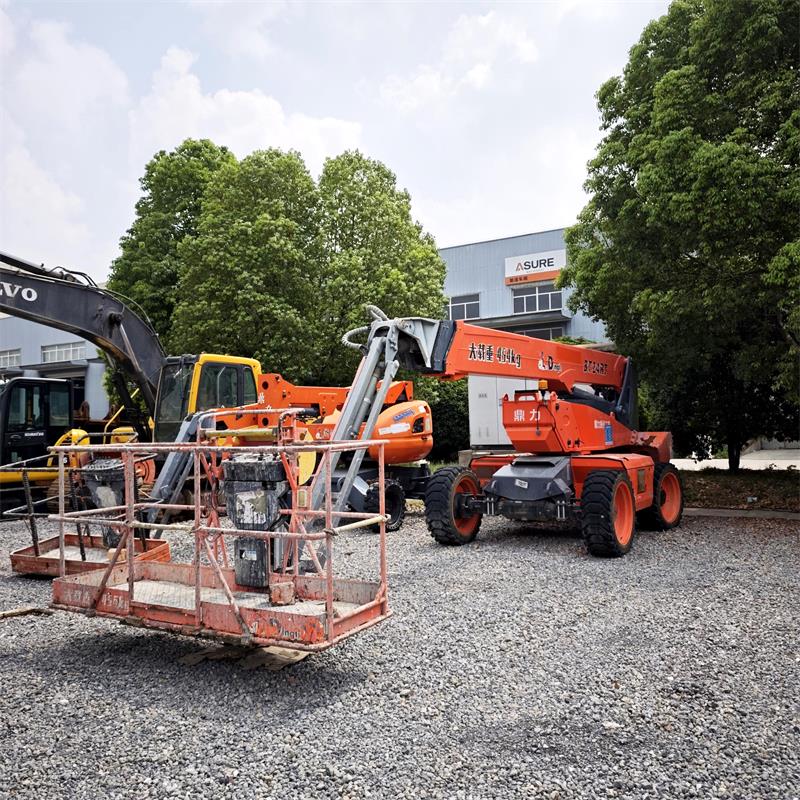
Core Definition and Application Scenarios of Aerial Work Platforms
Aerial work platforms (AWPs) are power-driven devices that provide elevated work surfaces via mechanical lifting or boom extension, also known as aerial work vehicles or lift platforms. Applied in construction, equipment maintenance, facade cleaning, and warehouse inspection, they outperform traditional scaffolding with motorized mobility, adjustable height, and integrated safety features, enabling stable operations across 4-56m vertical ranges.
Technical Characteristics of Three Core Types
1. (Scissor Lift)
Characterized by vertical scissor arm structure, it offers 4-16m working height with over 500kg load capacity, ideal for factory ceiling installation and large-area flat work, ensuring high stability via rigid support.
2. (Knuckle Boom Lift)
Featuring articulated bendable booms, it reaches 9-25m height with 3m minimum turning radius, navigating tight spaces like building corners or indoor pipes for complex environment maintenance.
3. (Straight Boom Lift)
With telescopic straight booms, it achieves 18-56m ultra-high altitude work via rotating top platform, specialized for vertical surfaces like wind turbines and high-rise facades, exceeding traditional height limits.
Golden Rules for Safety Operation and Maintenance
Maintenance Protocols (English Key Points):
Replace hydraulic oil (ISO VG46) every 500 working hours, cleaning the tank thoroughly during replacement;
Inspect wire ropes weekly, replacing immediately if over 10 wires are broken;
Maintain electrical systems monthly, checking terminal connections and sensor functionality.
Industry Technological Upgrades and Selection Strategies
The industry is accelerating electrification—lithium battery-driven platforms reduce noise by 40% and eliminate emissions, while IoT modules enable remote operation monitoring. Lightweight aluminum platforms, 30% lighter, suit commercial and municipal sites with load restrictions.
For selection, choose straight booms for >20m work, scissor lifts for <10m flat areas, and knuckle booms (2.5m turning radius) for narrow spaces, optimizing both efficiency and safety.
Related News
Sep 2, 2026
Remanufactured vs Refurbished vs Rebuilt vs As-Is: What These Terms Actually Mean on Used Machinery
Four labels — remanufactured, refurbished, rebuilt, as-is — can mean a USD 5,000 to USD 50,000 price gap on the same machine. A plain-English breakdown of industry standards, what each covers, warranty differences, and how to write the condition into your contract.

Sep 2, 2026
How to Pay for Machinery from China: T/T, Letter of Credit and Trade Assurance Compared
T/T, letter of credit, Trade Assurance, or escrow — which payment method protects you best when buying used construction machinery from China? A detailed breakdown of each method's process, costs, risks, and when to use each one, with a payment timeline and comparison table.
Sep 2, 2026
What Warranty Do You Actually Get on Used and Remanufactured Machinery?
Most used machinery is sold as-is with no warranty. Remanufactured machines may carry 30 to 90 days — but what does that actually cover, and what does it exclude? An honest breakdown of warranty coverage, exclusions, how to confirm terms before buying, and ASURE's warranty policy.